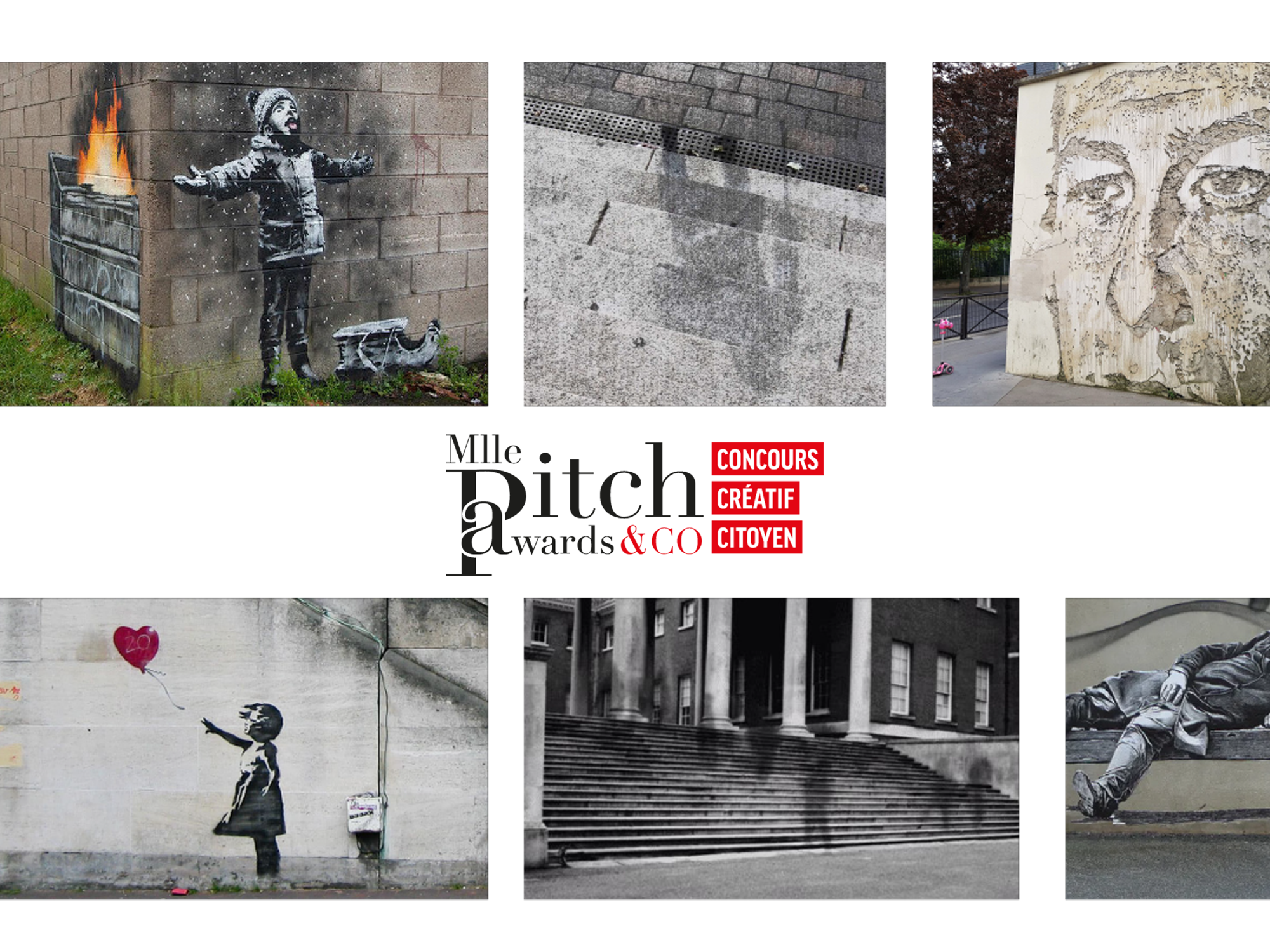
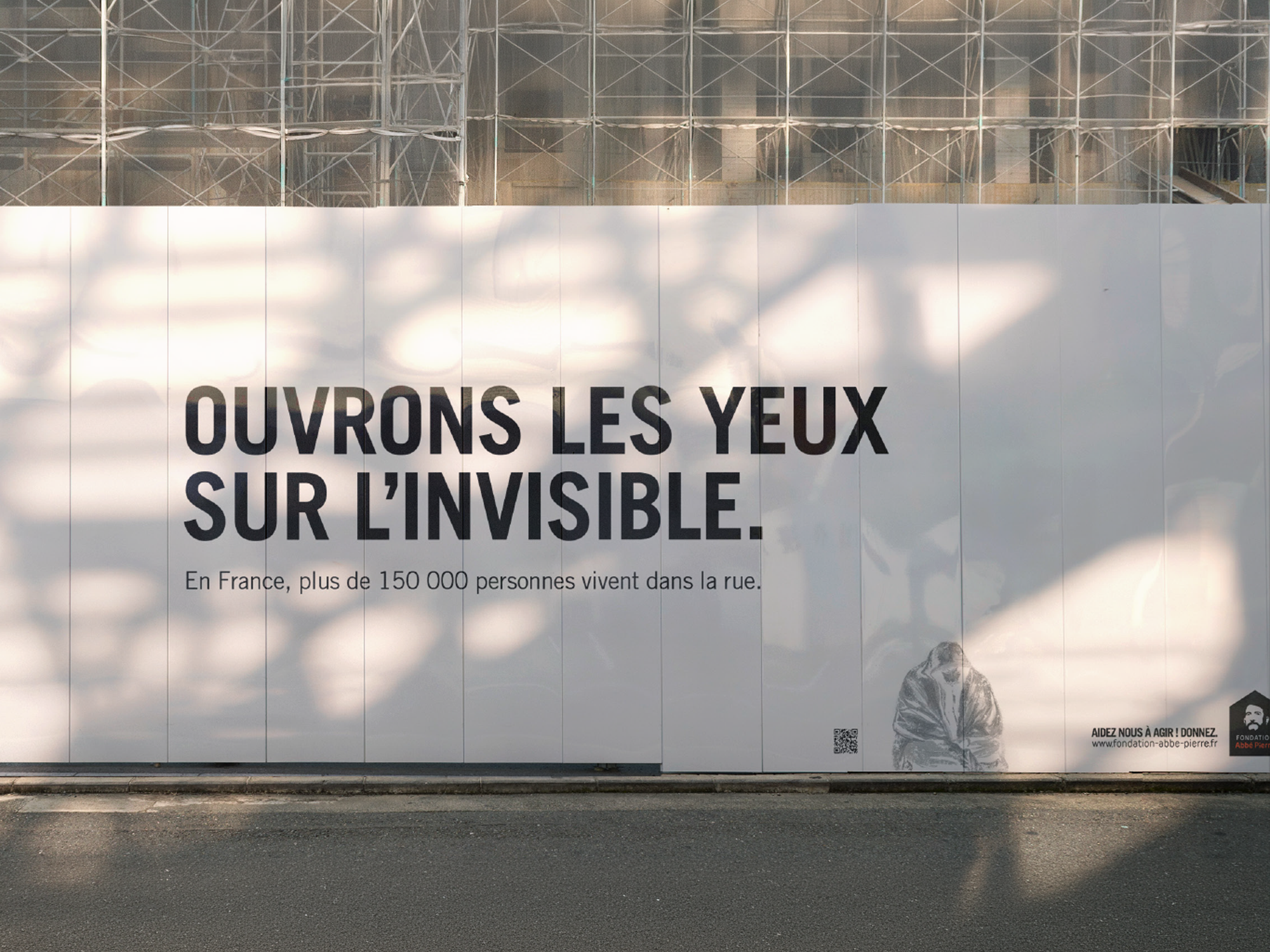
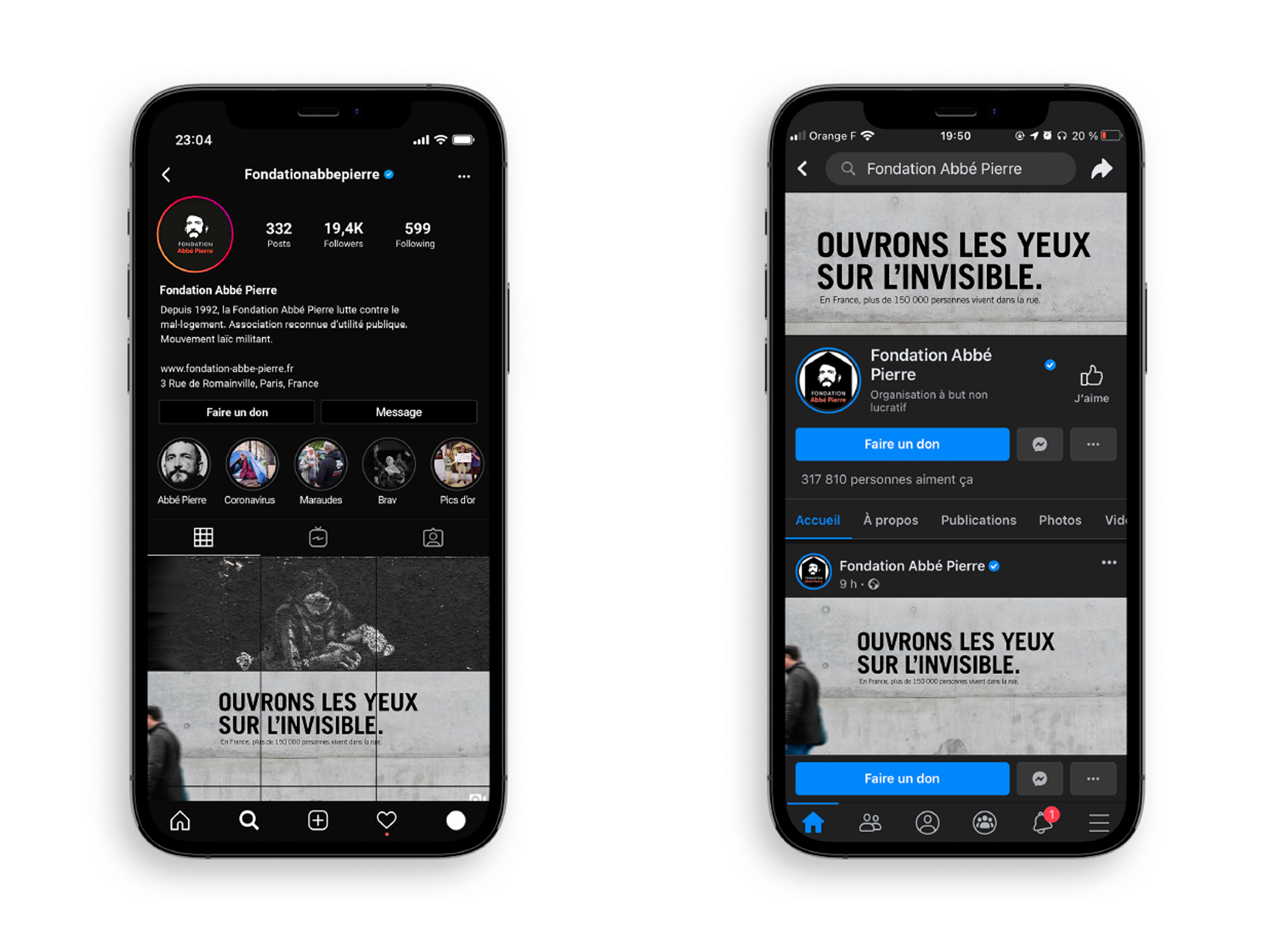
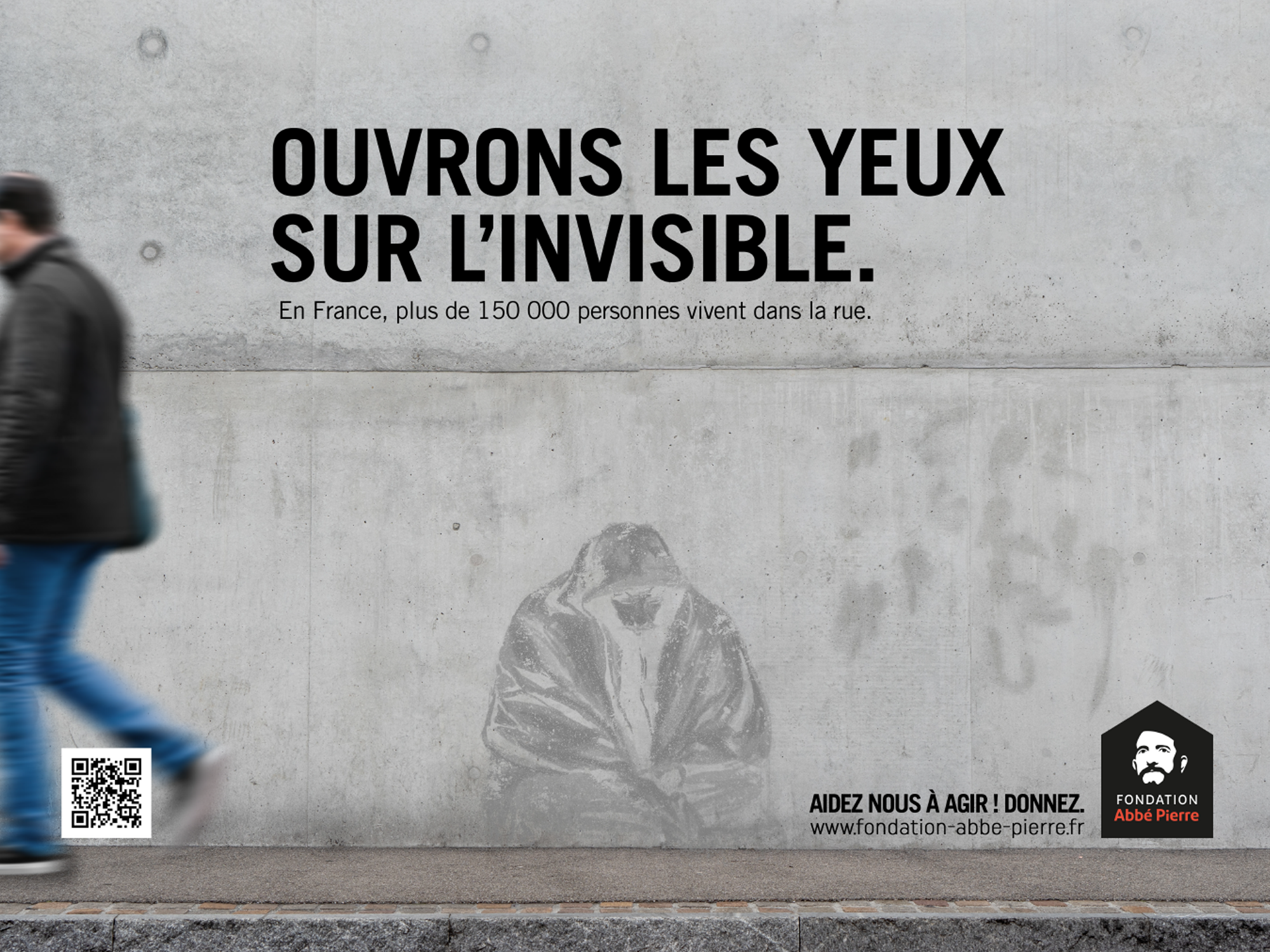
Une campagne pour la Fondation Abbé-Pierre (aujourd'hui Fondation pour le logement), créée pour les Mlle Pitch Awards. Le problème : sans-abri et exclusion sociale. 150 000 sans-abri en France. Déni de la société, invisibilité, discrimination. La fondation lutte contre les logements pauvres, accueille et guide les personnes en difficulté et sensibilise le public. L'objectif est de lutter contre l'injustice et de déplacer les lignes. La campagne demande : que dirait Abbé-Pierre de notre attitude collective envers les plus vulnérables ?

Client

Mlle Pitch Awards

Rôle

Directrice artistique, Graphiste et Conceptrice

Services

Campagne 360 Communication

Défis & Objectifs

/ Aperçu du projet

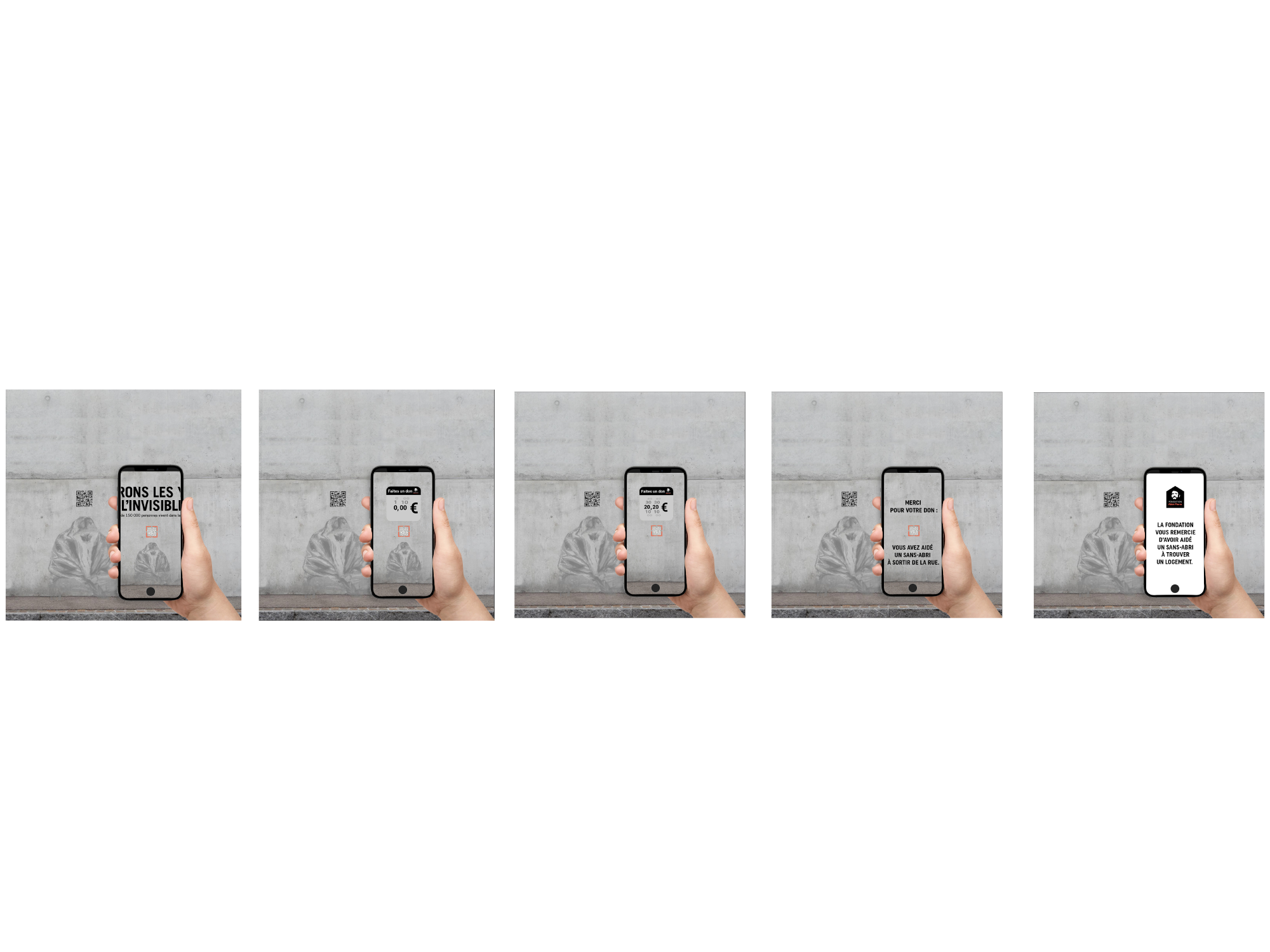
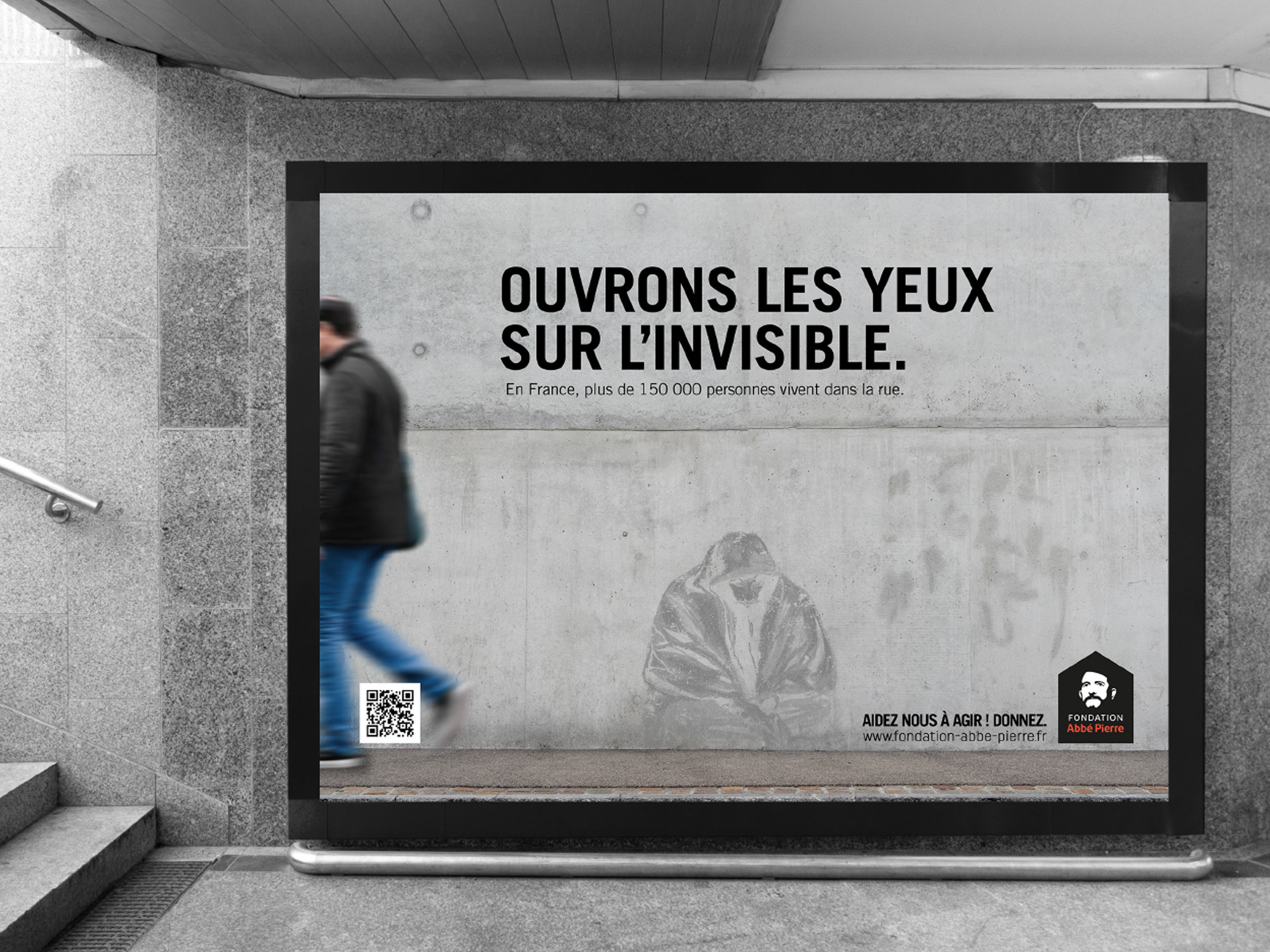
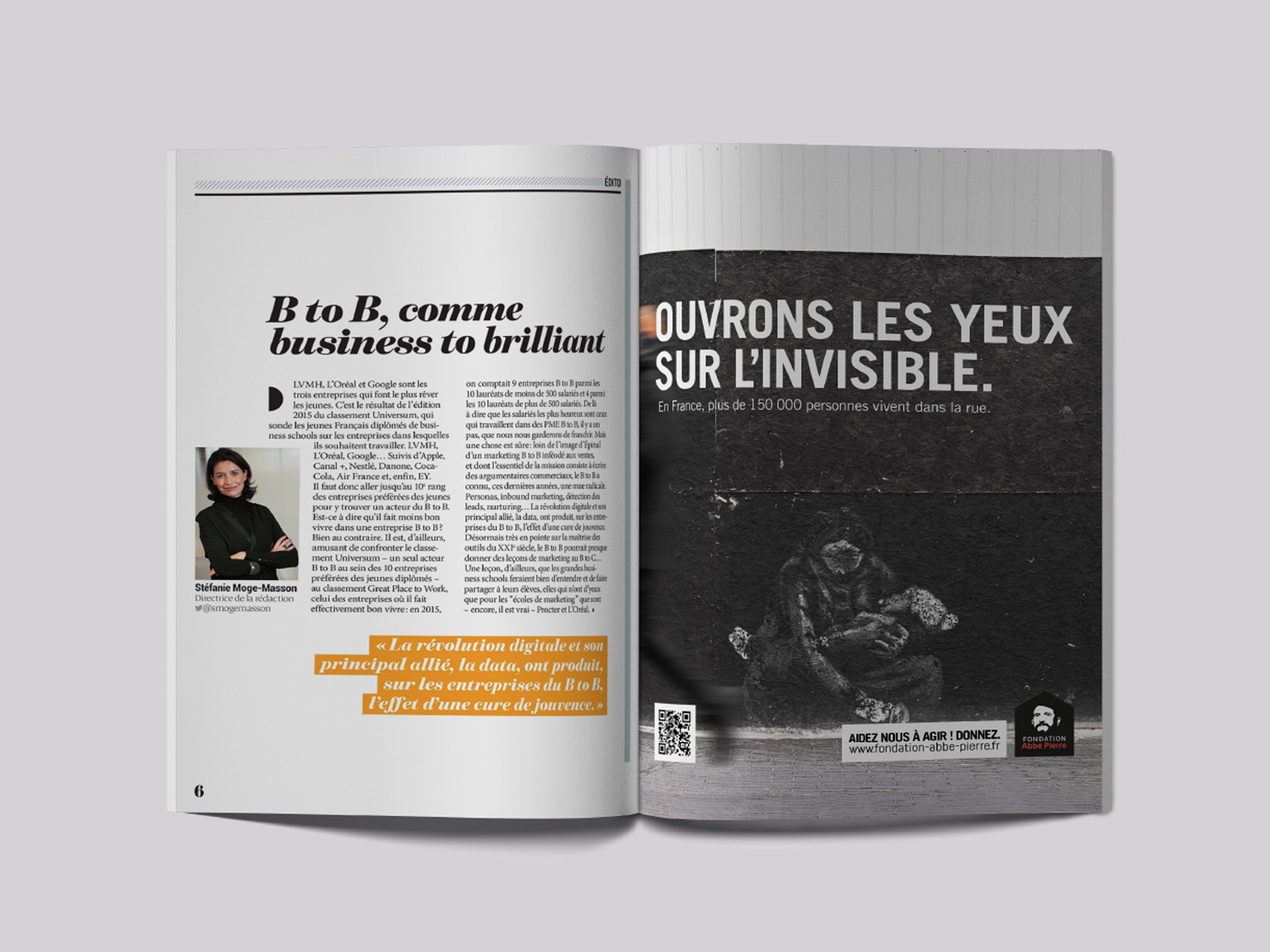
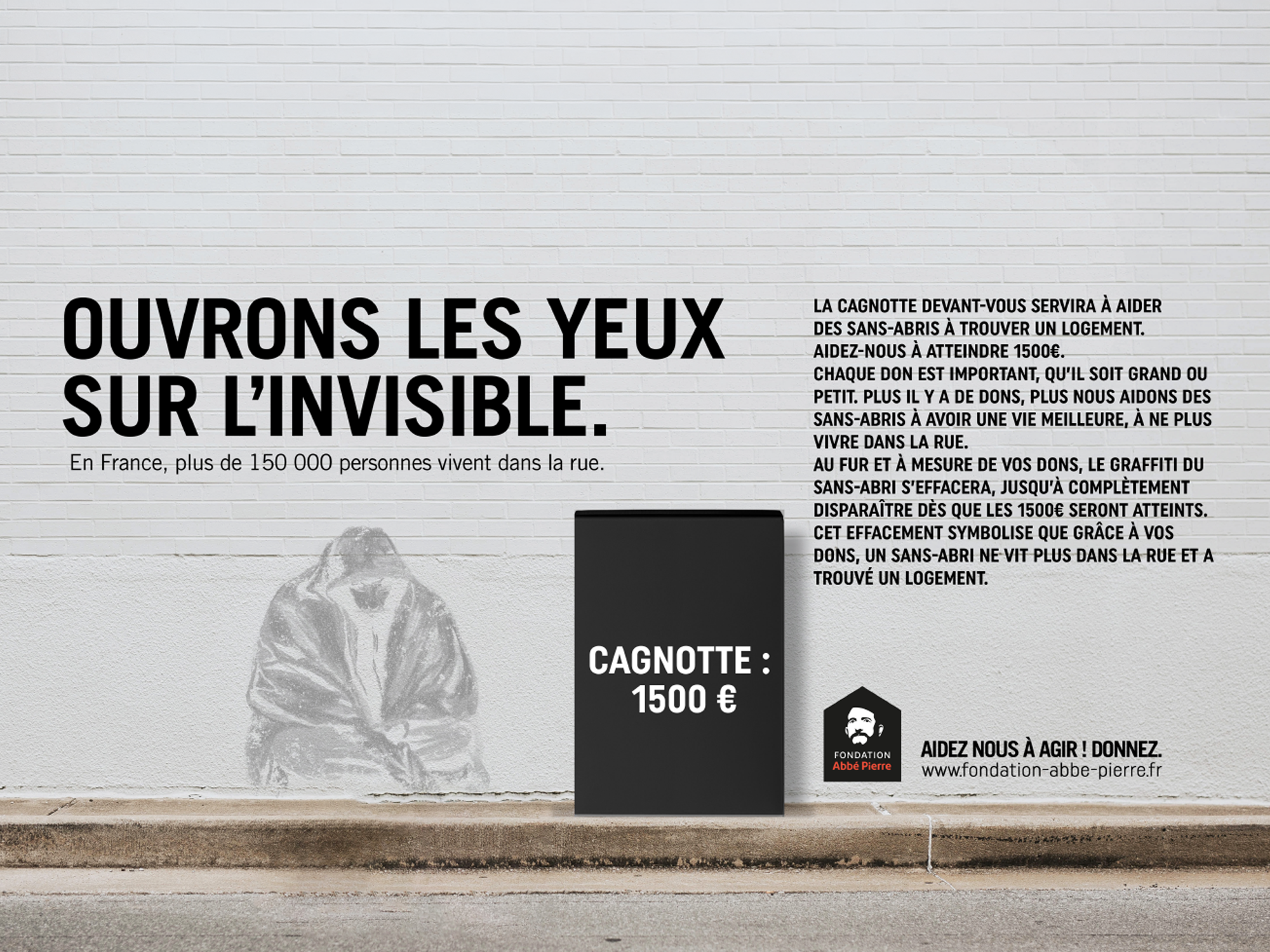
The campaign is built around the baseline “Let’s open our eyes to the invisible.” It represents homeless people (“the invisible”) as faded, barely visible figures. Using augmented reality via a QR code, passersby can make a donation. When a donation is made (any amount), the homeless figure disappears symbolizing that thanks to the donation, a homeless person has found housing and no longer lives on the street. The campaign uses street art (graffiti, shadows, silhouettes) because street art and homeless people share the difficult reality of the street. Street art is accessible to everyone, present in our daily environment. The campaign is deployed on city walls. Two main activation methods: a digital AR experience via QR code, and a physical collection box (cagnotte) in the street where donations progressively erase a graffiti until it completely disappears once the target amount is reached.

/ Défis

Representing homelessness without miserabilism (no pity, no graphic suffering). Making the “invisible” visible in a way that is modern, attention-grabbing, and respectful. Using street art to create a connection between passersby and homeless individuals. Designing an AR experience that is simple, intuitive, and works on standard smartphones. Ensuring the physical cagnotte installation is secure and clearly understood by the public. Balancing digital and physical touchpoints for maximum impact. Targeting the general public, young people, and new donors effectively.

/ Objectifs

Create a campaign that raises awareness about the invisibility of homeless people. Use street art graffiti as a visual metaphor for the hidden presence of the homeless. Integrate augmented reality to make the act of donating immediate and symbolic (the figure disappears when you give). Install physical donation boxes in the street where progressive erasure of the graffiti shows collective impact. Include the mandatory baseline “Aidez-nous à agir! Donnez.” and the Fondation Abbé-Pierre logo. The tone must be modern, impactful, and invite action without guilt-tripping.

Processus
Créatif

Started with the core insight: homeless people are often ignored or overlooked they become invisible to society. Researched street art as a medium because it shares the same walls and spaces as homeless individuals. Chose silhouettes or faded graffiti figures to represent “the invisible” present but not fully visible. Developed the baseline “Ouvrons les yeux sur l’invisible” as a call to collective awareness and action. Designed the visual identity: grayscale or muted tones for the graffiti, with a pop of red (Fondation Abbé-Pierre) for the QR code and call-to-action. Created the AR journey: scan QR code → baseline appears → donation interface → any amount triggers the disappearance of the figure (via animation or overlay) → thank you message: “Thank you for your donation: you helped a homeless person leave the street” → final screen: “The foundation thanks you for helping a homeless person find housing.” For the physical cagnotte: installed a transparent box with a graffiti of a homeless person on the wall behind it. A text explains that each donation erases part of the graffiti. The figure fades progressively as the box fills, completely disappearing when the target is reached. Tested both concepts with target audiences (young people, general public) to ensure the disappearance symbolism is understood as housing access, not erasure of the person. Delivered a campaign that uses art, technology, and collective action to turn invisible lives into visible change one donation, one erased silhouette, one housed person at a time.

fr_FRFR